

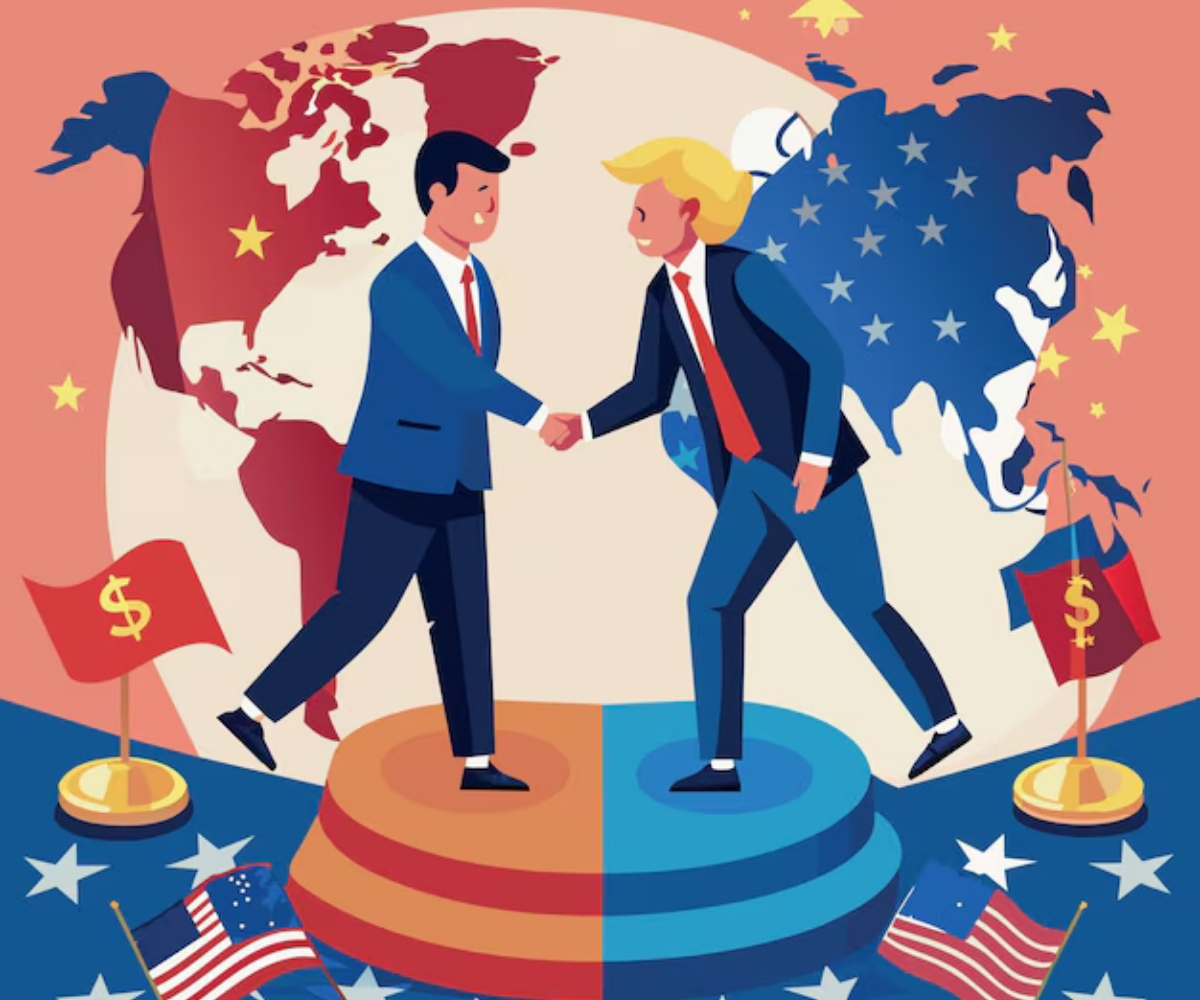
Critical minerals have become one of the most important topics in international trade. As demand continues to grow for electric vehicles, renewable energy, semiconductors, aerospace, and advanced manufacturing, countries are working to secure reliable supplies of the raw materials that make these technologies possible. Today, China plays a leading role in the mining, processing, and refining of many critical minerals, including rare earth elements, graphite, antimony, and tungsten. Over many years, China invested in processing facilities, developed long-term relationships with mining companies around the world, and built an extensive supply chain that serves manufacturers across multiple industries. As a result, changes in China’s production or export policies can have a significant impact on global markets.
Critical minerals underpin industries worth trillions of dollars, and import dependence puts key sectors at risk.”
Source: U.S. Department of the Interior / USGS
Publication: 2025 List of Critical Minerals
Date: November 14, 2025
For businesses in the United States, these developments create both challenges and opportunities. Manufacturers that rely on imported critical minerals may face supply disruptions, longer delivery times, higher costs, or greater price volatility when global supply becomes tighter. Companies producing batteries, semiconductors, renewable energy equipment, industrial machinery, electronics, and defense-related products all depend on a stable supply of these materials. At the same time, the U.S. Government has responded by encouraging domestic mining, expanding mineral processing, investing in recycling, supporting strategic stockpiles, and strengthening partnerships with allied countries. These efforts are designed to diversify supply sources, reduce dependence on any single country, and build a more resilient critical minerals supply chain for the future.
China’s long-term investment in critical minerals demonstrates that strong supply chains are built over many years through strategic planning, infrastructure, processing capacity, and international partnerships. Rebuilding or expanding supply chains elsewhere will also require time, investment, and cooperation between governments and private industry. For companies operating in today’s global market, the most effective strategy is often to diversify sourcing, develop trusted supplier relationships, and maintain greater visibility across the entire supply chain. Organizations that plan ahead and build resilient procurement strategies are generally better prepared to manage market uncertainty and respond to future changes in global trade.
Did You Know?
- Higher procurement risk – Manufacturers may need to qualify multiple suppliers instead of relying on a single source.
- Greater price volatility – Export restrictions or supply disruptions can lead to sudden increases in raw material costs.
- Longer planning cycles – Companies may hold more inventory or negotiate longer-term supply agreements to reduce risk.
- Supply chain diversification – Businesses are increasingly sourcing from multiple countries rather than a single market.
- Increased investment – U.S. companies are investing in domestic mining, refining, recycling, and processing to strengthen long-term supply security.
- Strategic partnerships – Governments and private companies are expanding cooperation with trusted partners in regions such as Australia, Canada, Southeast Asia, and other allied countries to improve supply chain resilience.
At Wohnen, we believe informed decisions begin with reliable market intelligence. By monitoring global developments, maintaining trusted international partnerships, and supporting responsible sourcing, we help our customers build stronger, more resilient critical mineral supply chains for long-term success.”